


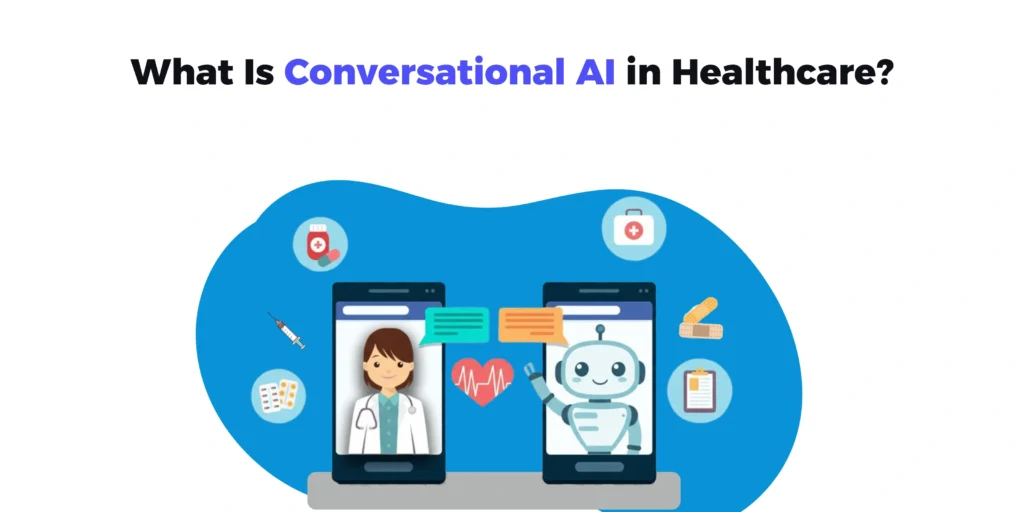
Conversational AI in healthcare refers to intelligent systems that use natural language processing, machine learning, and voice or text interfaces to engage with patients, clinicians, and staff in human-like conversations.
These tools go beyond basic scripted responses, offering context-aware interactions through chatbots, virtual assistants, and voice agents. As of early 2026, adoption continues to grow rapidly, with the AI voice agents segment in healthcare valued at approximately USD 650 million and projected to expand significantly in the coming years.
The broader AI in healthcare market reached around USD 37-52 billion in 2025-2026 estimates across multiple reports, driven by needs for better patient access and reduced administrative load.
Studies indicate that AI in healthcare could generate substantial savings, with projections of up to USD 150 billion annually for the U.S. economy by around 2026 from improved efficiencies.
This blog examines how conversational AI in healthcare supports patient care, addresses clinician workload, and delivers measurable outcomes, based on current data and implementations.
What Conversational AI in Healthcare Involves
Conversational AI systems in healthcare combine speech recognition, natural language understanding, and generative models to handle queries, provide information, and assist with tasks.
Unlike rule-based chatbots, these platforms maintain context across interactions, recognize medical terminology, and integrate with electronic health records (EHRs) under strict privacy standards like HIPAA.
Key features include:
- Voice and text channels for flexible access
- Real-time responses to common questions
- Integration with scheduling, reminders, and documentation tools
- Ambient listening capabilities that capture conversations for note generation
These systems aim to make routine communication more efficient while maintaining accuracy and security.
Main Applications of Conversational AI in Healthcare
Conversational AI in healthcare addresses multiple areas of daily operations.
Appointment Scheduling and Reminders
Many facilities use these tools for booking, rescheduling, and sending reminders. Automated, natural-language interactions reduce no-show rates significantly.
Studies show implementations of AI-powered reminders and prediction models have achieved reductions of 50% or more in no-show percentages in some primary care settings.
One analysis reported a drop from 20.82% to 10.25% after deploying predictive tools, with targeted outreach contributing to the outcome.
Patient Triage and Initial Guidance
Systems guide patients on symptom severity and direct them to appropriate care levels, such as urgent visits or self-care advice, helping manage demand outside peak hours.
Chronic Condition Support and Medication Adherence
Conversational AI in healthcare supports ongoing management by answering questions, sending adherence reminders, and tracking progress. These interactions promote consistency in treatment plans.
Post-Discharge Follow-Up
Automated check-ins after hospital stays monitor recovery, identify complications early, and reduce readmission risks through timely communication.
Ambient Clinical Documentation
Ambient tools listen to patient-clinician discussions and draft notes for review. Research from 2025 shows these systems reduce total EHR time by about 8.5% and note composition time by over 15% in some evaluations (JAMA Network Open studies on ambient AI scribes). In certain pilots, documentation time dropped by up to 30 minutes per day per provider.
Mental Health and Emotional Support
Specialized agents offer immediate responses for non-emergency concerns, providing resources and basic support while directing users to human professionals when needed.
Administrative Tasks
Handling billing inquiries, insurance questions, and basic follow-ups lightens call center volumes.
Benefits Observed in Practice
Conversational AI in healthcare provides advantages across groups.
For Patients
Access to information and services becomes available 24/7 without long waits. Reminders and follow-ups increase engagement, with some programs showing better adherence to care plans.
For Clinicians
Administrative tasks decrease, allowing more focus on direct patient interaction. Ambient documentation tools correlate with lower burnout indicators in multiple 2025 studies, including reduced after-hours work and improved well-being scores (University of Chicago Medicine and related JAMA findings). One large evaluation noted a substantial drop in documentation burden.
For Healthcare Organizations
Efficiency gains include shorter wait times, fewer missed appointments, and better resource use. Overall, AI applications contribute to operational improvements and potential cost reductions through better workflow.
| Area | Reported Impact Example | Source/Reference |
| No-Show Reduction | Up to 50%+ in targeted implementations | PMC studies on AI prediction |
| EHR/Documentation Time | 8.5% total reduction; 15%+ in note composition | JAMA Network Open ambient AI |
| Clinician Well-Being | Lower burnout scores, less after-hours work | Multiple 2025 pilot evaluations |
Important Considerations
Accuracy remains critical, particularly for medical advice, where errors or omissions can occur. Privacy and compliance require robust safeguards.
Patient trust varies, with many preferring human involvement for sensitive topics. Integration with existing systems can present technical challenges, and ongoing monitoring helps maintain quality.
These tools work best as support for human teams rather than full replacements.
Looking Ahead for Conversational AI in Healthcare
Adoption is expected to continue, with more advanced voice agents, multimodal capabilities, and deeper integration.
Projections point to strong growth in voice-based solutions and ambient applications over the next decade. Facilities piloting these systems now position themselves to handle increasing demands effectively.
ContactSwing in Healthcare Communication
ContactSwing serves as a communication platform that supports team coordination and shift management in healthcare settings.
It facilitates notifications and approvals for scheduling changes, helping maintain smooth operations during staffing adjustments. Many organizations incorporate such tools alongside other digital solutions to support overall workflow.
Conclusion
Conversational AI in healthcare offers practical ways to handle routine interactions, support documentation, and improve access to information.
Current implementations show reductions in no-shows, documentation time, and administrative burden, contributing to better experiences for patients and clinicians. As data accumulates, these systems become part of standard operations in many settings.
Key Takeaways
- Appointment reminders and prediction models reduce no-shows by significant percentages in various studies.
- Ambient tools decrease documentation time by 8-15% or more in evaluated programs.
- Clinician well-being improves with less after-hours work in multiple pilots.
- Patient access to basic support increases through 24/7 availability.
- Careful implementation, including accuracy checks and privacy measures, remains essential.
FAQs
What does conversational AI in healthcare typically handle?
It manages appointment booking, reminders, symptom guidance, follow-ups, and basic queries using natural language, while integrating with EHRs for secure operations.
How much can no-show rates decrease with these tools?
Studies show reductions of 50% or more in some primary care settings through predictive reminders and targeted outreach, improving schedule efficiency.
Does ambient documentation save clinicians time?
Yes, 2025 research indicates 8.5% less total EHR time and over 15% reduction in note composition, with some pilots showing up to 30 minutes daily savings.
Can conversational AI reduce clinician burnout?
Multiple evaluations link it to lower burnout indicators, including reduced after-hours work and improved well-being scores from less administrative load.
Is patient engagement improved by these systems?
They provide 24/7 access to information and reminders, supporting better adherence and communication without replacing human interactions.
What are the main limitations of conversational AI in healthcare?
Accuracy issues in complex cases, need for ongoing monitoring, privacy requirements, and varying patient preference for human contact remain key considerations.
How is HIPAA compliance addressed?
Systems use secure integrations, encryption, and access controls to meet regulations, with regular audits to protect patient data during interactions.
What future developments are expected?
Growth in voice agents, multimodal features, and deeper EHR ties, with continued focus on accuracy and ethical use in patient care.