


Conventional lead generation is slow, irregular and very manual. In the fast-paced world of data-led sales, today’s businesses need smarter ways to stay ahead.
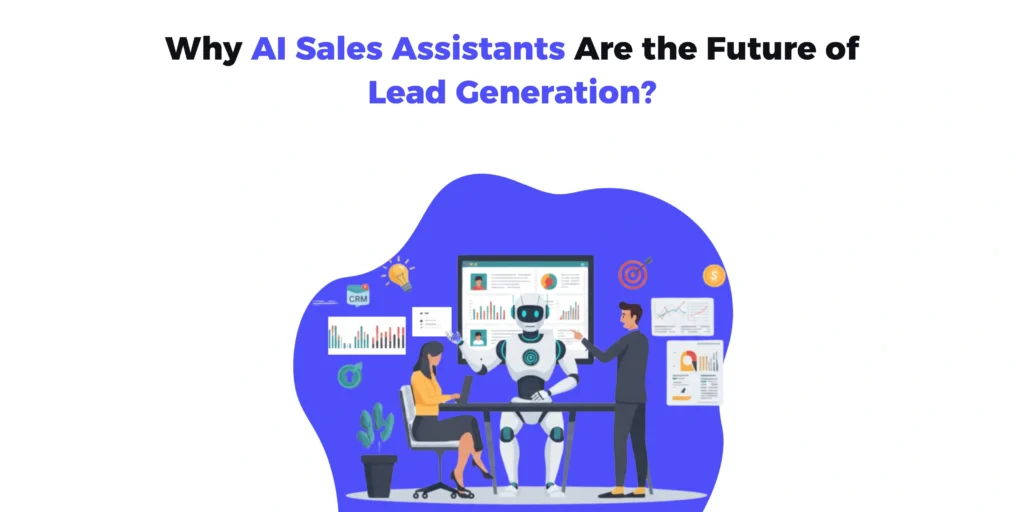
That’s where A.I. sales assistants come in. With the ability to automate repetitive tasks, as well as the overall outreach process, this intelligent tool is redefining the way businesses find potential customers.
The future of lead generation with AI is not a trend, it’s rapidly becoming the norm for growing businesses looking to scale and close deals faster.
Rising Demand of AI Sales Assistants
AI sales assistants are smart virtual agents built to automate and streamline aspects of the sales process. Unlike their human sales rep counterparts, they never sleep, and aren’t bound by the limitations of weekdays or time zones to make reach out and/or follow up with leads.
Their core functions include:
Outreach: Making first contact with leads (personally) over the phone, by email, or through chat. Follow-ups Sending out reminders on a set schedule to keep leads engaged.
Qualification: Utilizing data through algorithms in AI for lead qualification , spot high-value leads based on intent without human input.
Nurturing: in which cold or on-the-fence leads are talked to and then re-touched over time to increase conversion possibility.
In doing so, AI sales assistants liberate human teams to close deals and build relationships instead of performing mundane tasks.
Revolutionizing Lead Generation with AI
Traditional lead generation often involves guesswork, delays, and missed opportunities.
Revolutionizing lead generation with AI means replacing outdated processes with intelligent systems that learn, adapt, and respond in real-time.
With lead generation with AI, businesses can:
- Instantly identify qualified leads from large datasets.
- Engage prospects at the right time with the right message.
- Scale outreach efforts without increasing team size.
The result? Faster lead cycles, higher conversion rates, and more predictable revenue, proving that AI isn’t just enhancing lead generation, it’s redefining it.
AI-Powered Lead Qualification
Lead qualification is a manual, laborious process in the traditional sales pipeline and the likelihood of a structured response is unreliable.
Sales reps traditionally wade through spreadsheets, trust their instincts and drive hours from lead to lead that may never convert. This antiquated method slows the pipeline and wastes resources.
Artificial intelligence-driven lead qualification disrupts this process by automating and enriching it. They process a variety of data points (website activity, email interactions, previous touchpoints, social signals, demographic information) with machine learning algorithms.
On the basis of such data, AI generates lead scores and categorizes prospects by their potential to convert.
When a qualified lead accesses your pricing page multiple times and repeatedly opens follow-up emails immediately, the AI identifies them as a high-importance target and your sales team’s call will receive a call or message.
Lower-value leads can be nurtured purely by machine action.
This creates efficiency by removing all the guesswork in the lead qualification process, allowing your sales team to give their time to leads that will actually make a difference.
The outcome is a faster time-to-revenue when leads convert to sales.
Sales Call Automation: Scaling Outreach
Manually reaching out to lots of leads is a pain in the ass It’s labor intensive, error prone and it doesn’t scale.
This is where sales call automation comes into play, enabling companies to reach hundreds (if not, thousands) of prospects per day while maintaining customization and quality.
For example with AI-powered sales call automation, intelligent voice agents can make outbound calls, have natural conversations, qualify leads on the fly, and if they are ready even book a meeting for a rep right into their calendar.
These AI agents are on call for 24 hours, insuring immediate responses and no long delays that can otherwise cause hot leads to cool.
And the true beauty is that its integration with any CRM is very smooth. All communications are recorded automatically, follow-up work is scheduled based on call results, and future calls are personalized with historical interaction data.
This results in a closed-loop system where no lead is left behind and every conversation is a valuable one.
And the results speak for themselves: human salespeople are unchained from drudgery, response times are cut by orders of magnitude, and outreach is both scaleable and sustainable. In other words, sales call automation transforms what used to be a bottleneck into a growth accelerator.
AI Sales Assistants for Lead Nurturing
For most businesses, particularly those that are B2B and high-ticket B2C, it often takes weeks or even months for a lead to convert into a purchase decision.
This long journey makes lead nurturing an essential part of the sales process, and one of the most neglected, due to time and resources.
AI virtual sales assistants for lead nurturing tackle this by maintaining leads’ attention via responsive, context-sensitive conversations.
These assistants use AI to intelligently track the behavior of every lead, for instance which emails they open, websites they visit, or calls they pick up, and automatically recommend the next best action.
Whether you’re sending a custom follow-up message, a reminder of an on-site demo or relevant content, AI makes every touchpoint a thoughtful and human-feeling one.
As you continue to regularly engage, your subscribers will develop trust in your brand and make your brand top-of-mind, particularly for leads who aren’t ready to convert immediately. Unlike human reps, rep doesn’t forget – or get overwhelmed – maintaining an eye on all leads at once and given current data all the time, so leads don’t spill through the cracks.
With AI taking on nurturing at scale, companies can move sluggish leads closer to a sale, bring back leads that have gone cold and massively improve the odds of converting more deals over time.
The Competitive Edge
Adopting AI in sales isn’t just about keeping up with technology, it’s about gaining a measurable advantage in performance, scalability, and cost-efficiency.
Businesses that have integrated AI sales assistants and sales call automation into their workflows are already seeing dramatic improvements across key sales metrics.
Example 1: SaaS Startup Increases Conversions by 35%
A mid-sized SaaS company integrated an AI-powered lead qualification tool into its inbound funnel. Previously, it took their team up to 48 hours to respond to form submissions and another day or two to qualify the leads.
With AI, lead scoring and qualification now happen in real-time, and follow-up emails or calls are triggered within minutes. The result? A 35% increase in qualified lead conversions and a 25% reduction in lead drop-off during the first 24 hours.
Example 2: E-commerce B2B Brand Reduces Cost Per Lead by 40%
An e-commerce platform catering to retailers adopted sales call automation to reach out to leads acquired through ads and webinars.
Their AI voice agents handled over 500 calls per day, far beyond what their human team could manage, while identifying sales-ready leads and syncing data directly into their CRM.
This automation cut their manual effort in half, reduced the cost per lead by 40%, and improved overall outreach efficiency without hiring additional sales reps.
Example 3: Enterprise Company Cuts Response Time from 2 Days to 2 Minutes
A worldwide logistics firm struggled to quickly come back to leads from its website especially with time zone differences. They automated the initial response, and basic qualification, steps with AI sales assistants.
Today, leads get a personalized message or phone call within two minutes of filling out a form, no matter what time it is. Their average lead response time plunged to less than 2 minutes down from 2 days for everyone else and they saw a 50% lift in meetings booked.
These examples from the real world illustrate that, AI sales assistants are not just a nice-to-have; they’re a competitive advantage.
Do better conversion rates, increased speed-to-contact and huge cost-savings catch your interest? If so, then AI will be an important weapon for businesses looking to scale smarter and close more business in a competitive market.
Conclusion
AI sales assistants are no longer some future capability; they’re a practical tool that is delivering actionable results today. From automated sales calls to AI and machine learning-based lead qualification and nurturing, artificial intelligence is revolutionizing the entire process of lead generation.
Companies leveraging these technologies are experiencing quicker response times, increased conversion rates, and dramatic cost reductions. And in this competitive landscape, adopting AI lead generation is not just getting an update, it’s becoming a strategic requirement to stay ahead.