


Real estate agents today handle hundreds of questions every week from buyers, sellers, renters, and investors. Many of those questions come at night, on weekends, or when the agent is already showing a house.
Chatbots have become one of the most practical tools to manage this constant flow of messages while still giving fast and accurate answers.
For instance, a chatbot can greet a website visitor with a simple “Hi, looking for homes in the area? Tell me your budget,” and guide them through options without the agent needing to drop everything.
This setup lets agents focus on building relationships and closing sales. Below is a clear look at how chatbots actually help real estate agents in everyday work.
How Do Chatbots Help Real Estate Agents Save Time Every Day?
Most agents spend hours answering the same basic questions: What is the price? How many bedrooms? When is the open house? Does it have parking? A chatbot can answer these questions in seconds, 24 hours a day. The agent only steps in when the buyer is truly ready to schedule a viewing or make an offer.
Think about a typical day: An agent might get 50 messages before noon, but only 10 are from serious prospects. A chatbot sorts through the rest by pulling details from the listing database and responding right away.
This cuts down on back-and-forth emails or texts that drag on.
-
- Instant responses: Chatbots reply in under five seconds, compared to agents who might take hours during a busy day.
-
- Routine handling: They manage 70-80% of simple queries, like square footage or school districts, based on integrated data.
-
- Escalation alerts: When a conversation turns complex, like discussing financing options, the bot notifies the agent with a summary of what was discussed.
According to the National Association of Realtors (NAR) 2024 Profile of Home Buyers and Sellers, 96% of buyers use online tools to search for properties. That means most leads start with an online search.
A chatbot placed on the listing page or the agent’s website captures the visitor the moment they show interest. In one case from Redfin, their “Ask Redfin” chatbot reduced the time to connect buyers with agents by 50%, leading to 93% of users returning to the app within a week.
How to Use AI for Real Estate Lead Generation
A good chatbot does more than answer questions. It asks a few smart questions back: Are you pre-approved for a loan?
What price range are you looking at? When do you need to move? These short questions help the chatbot score the lead as hot, warm, or cold. The agent receives a notification only for the hot leads.
This process turns casual browsers into qualified prospects. For example, if someone says they’re looking for a three-bedroom home under $400,000, the bot can pull matching listings and ask for their email to send more details.
Many agents using chatbot systems report that 20-30% of website visitors leave their contact details because the conversation feels easy and helpful.
-
- Qualification steps: Start with open questions like “What brings you here today?” then narrow to specifics like timeline or must-have features.
-
- Data collection: Bots gather name, phone, and preferences without feeling like a form, it’s just part of the chat.
-
- Follow-up automation: Send a daily digest of new matches to keep the lead warm.
Industry insight: The NAR 2025 Realtor Technology Survey notes that 68% of agents now use AI tools, with 7% specifically using chatbots for lead capture. This aligns with broader trends where AI helps prioritize efforts on leads likely to convert.
How to Use AI in Real Estate Marketing
Chatbots are now built into Facebook, Instagram, WhatsApp, and even text messaging campaigns. When someone clicks on a Facebook ad for a new listing, the chatbot starts the conversation instantly.
It can send photos, virtual tours, or even schedule a call with the agent.
Some brokerages use chatbots to send automatic follow-up messages after an open house. A simple “Did you have any questions about the property you saw today?” often brings back buyers who were too shy to ask in person.
This keeps the marketing momentum going without extra effort from the team.
-
- Ad integration: Link ads directly to a chatbot flow that qualifies interest and books a follow-up.
-
- Personalized drips: Based on user input, send tailored content like “Here’s a similar home in your price range.”
-
- Event reminders: After an open house signup, confirm details and share a map.
Example: Century 21’s chatbot “Sofia” handles ad responses and has boosted engagement by providing instant property matches, as shared in industry case studies.
Overall, conversational AI in marketing has shown a 35% increase in qualified leads for some agencies.
How to Use AI to Find Real Estate Deals
Investors love chatbots too. Many investors set up chatbots on their own buyer websites with questions like:
Do you accept off-market deals?
What neighborhoods are you buying in?
Do you pay cash and close fast?
Sellers or tired landlords fill out the short form inside the chatbot, and the investor receives pocket listings that never hit the public market.
This approach uncovers hidden opportunities. For wholesalers, a chatbot on a simple landing page can collect seller details like motivation (job relocation, divorce) and property condition, then flag urgent ones for quick review.
-
- Off-market capture: Ask about “whisper listings” from frustrated owners not ready for public sale.
-
- Deal matching: Cross-reference seller needs with investor criteria for instant fits.
-
- Urgency scoring: Prioritize based on responses like “Need to sell in 30 days.”
A practical case: Platforms like Structurely report that their chatbots help investors qualify 40% more off-market deals by automating initial outreach.
How to Use AI in Real Estate Investing
Wholesalers and flippers use chatbots to keep in touch with their cash buyer lists. When a new deal comes in, the chatbot sends the property details to hundreds of buyers at once and asks, “Are you interested?” The first few who say yes get the contract. This method is fast and keeps the investor from chasing people who are no longer active.
For long-term investors, chatbots analyze market data in chats, like “Based on recent sales, this area’s values rose 5% last quarter, want comps?” This builds trust and informs decisions.
-
- Buyer list blasts: Segment lists by investment type (flips vs. rentals) for targeted sends.
-
- Market insights: Pull live data on cap rates or ROI during conversations.
-
- Contract routing: Guide interested parties to e-sign and assign deals.
Statistics show AI tools like these increase deal velocity: One study from JLL highlights generative AI as a top impact tech for investors, aiding in faster sourcing.
How to Use AI in Property Management
Property managers get dozens of maintenance requests and rental inquiries every day. A chatbot on the rental website or tenant portal can: Accept maintenance requests and create tickets automatically, show available units and schedule tours, answer common questions about pet policy, parking, or lease terms, and remind tenants about rent due dates.
Large property management companies using chatbots report a drop of almost 40% in phone calls and emails from tenants. This frees staff for on-site issues like inspections or evictions.
-
- Ticket triage: Categorize requests (e.g., plumbing vs. noise) and route to the right vendor.
-
- Lease renewals: Send reminders and answer renewal FAQs in chat.
-
- Tenant screening: Collect docs like pay stubs and run basic checks.
Case in point: Zillow’s Rentals AI Assist, powered by EliseAI, handles 24/7 renter queries and has cut response times by 60% for participating managers. The Institute of Real Estate Management (IREM) emphasizes such tools for efficient operations.
How to Use AI in Real Estate Business Overall
Chatbots fit into almost every part of the business: Buyer agents use them to qualify leads faster, listing agents use them to collect showing feedback, commercial agents use them to screen tenant requirements before sharing big lease packages, and team leaders use them to schedule appointments for all team members in one calendar.
The result is that agents spend more time with serious clients and less time on routine messages. For teams, a central chatbot dashboard tracks all interactions, spotting patterns like popular neighborhoods for targeted outreach.
-
- Feedback loops: After showings, ask “What did you like most?” and compile reports.
-
- Compliance checks: Ensure responses align with fair housing rules.
-
- Scalability: Handle spikes in inquiries during market booms without adding staff.
Broader adoption: The NAR supports AI standards for fairness and privacy, as outlined in their guidelines.
Real Numbers from the Industry
These figures come from trusted reports and help show the real impact.
-
- NAR’s 2024 Technology Survey showed that 41% of real estate brokerages now use some form of artificial intelligence or chatbot tool, up from previous years. The 2025 update confirms 68% agent adoption overall.
-
- Zillow reported that listings with a 24/7 chat option receive 3 times more inquiries than listings without one, based on their platform data.
-
- Placester and other website providers say pages with chatbots have a 25-35% higher lead conversion rate, drawing from user analytics.
Additional data: IBM studies indicate chatbots resolve 80% of routine inquiries, and a Miami agency saw 35% more qualified leads.
Simple Tips to Get Started
If you want to try a chatbot without spending a lot:
-
- Start with free or low-cost tools like ManyChat, Chatfuel, or the chatbot inside your CRM (Follow Up Boss, BoomTown, or kvCORE all have built-in options).
-
- Write answers to the 10 most common questions you get, keeping them casual like “Great choice! That home has 3 beds and a fenced yard.”
-
- Add 3-4 qualifying questions so you know how serious the person is, such as “What’s your timeline for moving?”
-
- Test it on one or two listings first and watch live chats to see what works.
-
- Check the conversations every day for the first week and improve the answers that feel stiff, add emojis or local references for warmth.
Most agents see results in the first month, with leads flowing in steadily.
Takeaway
Chatbots do not replace real estate agents. They simply take away the repetitive work so you can spend your time on what truly moves the needle: negotiating, building trust, and closing deals.
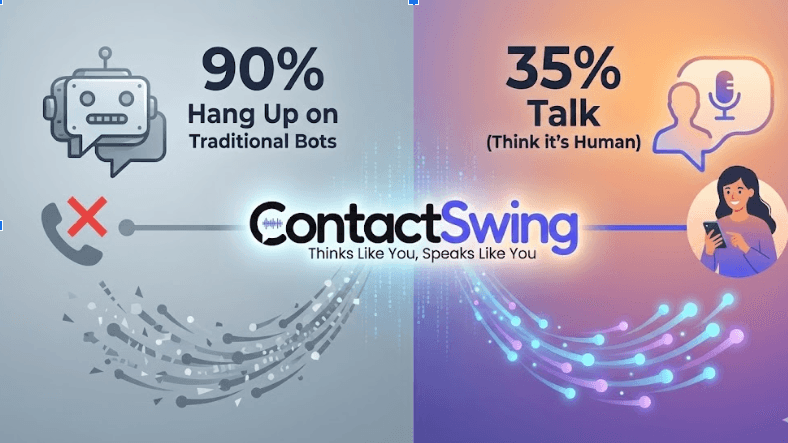
If you’re ready to add a chatbot that feels natural, qualifies leads fast, and works 24/7 without sounding robotic, take a look at ContactSwing.ai. It’s built specifically for real estate agents and teams, pulls listing data straight from your MLS, follows up across text, email, and social platforms, and hands you only the hottest leads with full conversation history.
Many agents using ContactSwing report getting 2-4 extra qualified appointments per week while cutting their daily message volume in half.
A good chatbot is like a tireless assistant who never sleeps and never asks for a commission split. When set up the right way, it becomes one of the highest-ROI tools in your business.
FAQs
Will buyers think a chatbot is annoying?
Not if it feels like a real conversation. Use short, warm replies with emojis and local flavor. Today’s buyers are used to messaging apps and love getting an instant answer at 10 p.m. instead of waiting until morning. Most are perfectly happy chatting with the bot until you jump in.
Do I need to know coding to set up a chatbot?
No coding required at all. Platforms like ContactSwing, ManyChat, or your CRM’s built-in tools use simple drag-and-drop builders. Most agents copy a few templates, add their listings, and have a working chatbot live on their site in under two hours.
Can a chatbot schedule showings for me?
Absolutely. It checks your calendar in real time, offers available slots, syncs with ShowingTime or Calendly, and books the appointment. The buyer gets a confirmation text and you get a notification with all their details—no more phone tag.
Is it safe to collect personal information in a chatbot?
Yes, when you use reputable real estate-focused platforms. They encrypt everything, follow NAR guidelines, and help you stay compliant with fair housing and privacy rules. You’ll see clear audit trails if you ever need them.
Do chatbots work for luxury or commercial real estate too?
They work even better in high-end and commercial deals. The bot politely asks qualifying questions (budget, timeline, decision-makers) before you spend time on tire-kickers, then hands you only the serious prospects ready for private listings or full packages.
How much do real estate chatbots usually cost?
Basic versions are free forever. Professional plans designed for agents (MLS integration, texting, lead scoring) typically range from $30 to $150 per month, depending on how many conversations you have and how many agents are on the team. Most agents see a positive return in the first 30 days.

Vamshikrishna Enjapuri
He leads the vision and development of AI-powered voice solutions that transform how businesses communicate. With over eight years of experience in building SaaS platforms and engineering AI-integrated products, Vamshi is passionate about solving real-world problems through automation and smart technology. At the helm of ContactSwing, he focuses on bridging the gap between innovation and user experience—helping industries like real estate and healthcare unlock growth through intelligent voice agents. His blog contributions reflect his hands-on leadership, deep tech expertise, and a commitment to creating practical, scalable solutions for modern businesses.